Why I built it
I wanted to understand how security risks connect to the work of managing controls, collecting evidence, and closing gaps. Regula brings those relationships into a working application instead of treating them as separate lists.


A governance, risk, and compliance workspace connecting business assets, security controls, evidence, and remediation.
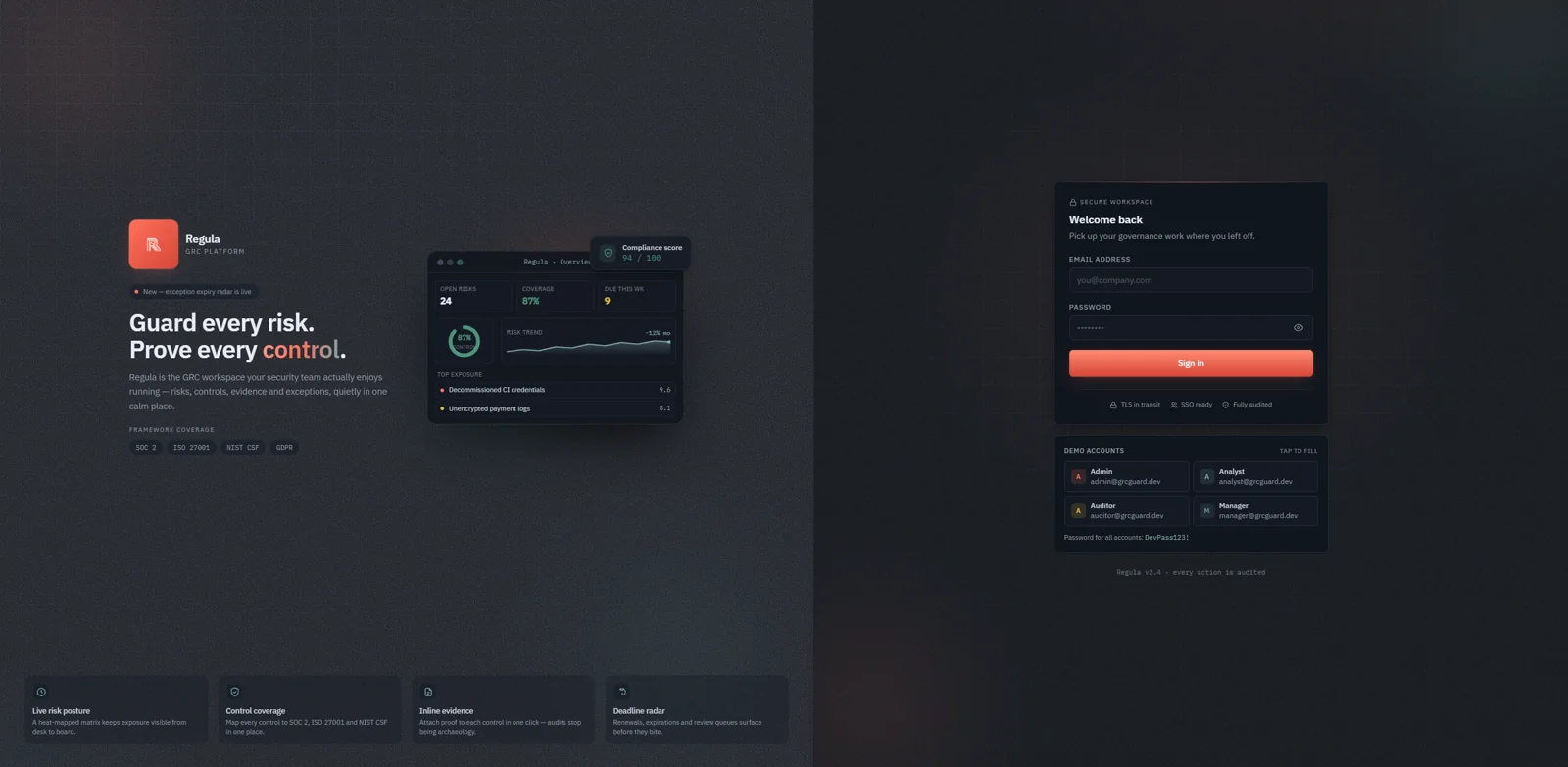
I wanted to understand how security risks connect to the work of managing controls, collecting evidence, and closing gaps. Regula brings those relationships into a working application instead of treating them as separate lists.
Make the risk-to-remediation lifecycle traceable: identify what matters, assess the risk, evaluate controls, attach evidence, and track the work needed to address findings.
Record assets, ownership, criticality, and data classification to establish the business context for a risk.
Score likelihood and impact on a 5×5 matrix. Track inherent and residual risk independently, then choose to mitigate, transfer, avoid, or accept.
Map controls to risks and framework requirements, assess effectiveness, and attach supporting evidence.
Record findings, assign remediation, and track progress. Risk acceptances and security exceptions have their own workflows, including expiration tracking.
Use dashboards and CSV exports to review risk posture, control implementation, and outstanding work.
Actual captures from the running Regula application with bundled demo data. Select a screenshot to open a larger preview.
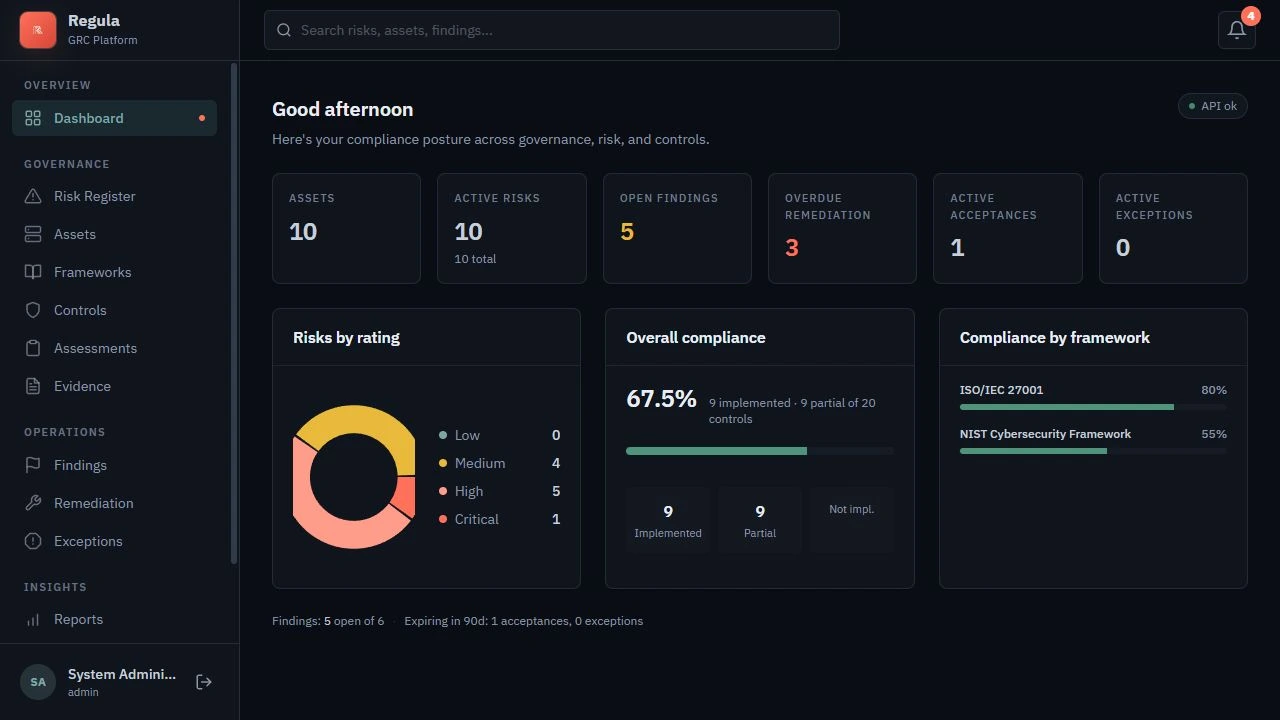
Review risk ratings, framework coverage, and outstanding work in one overview.
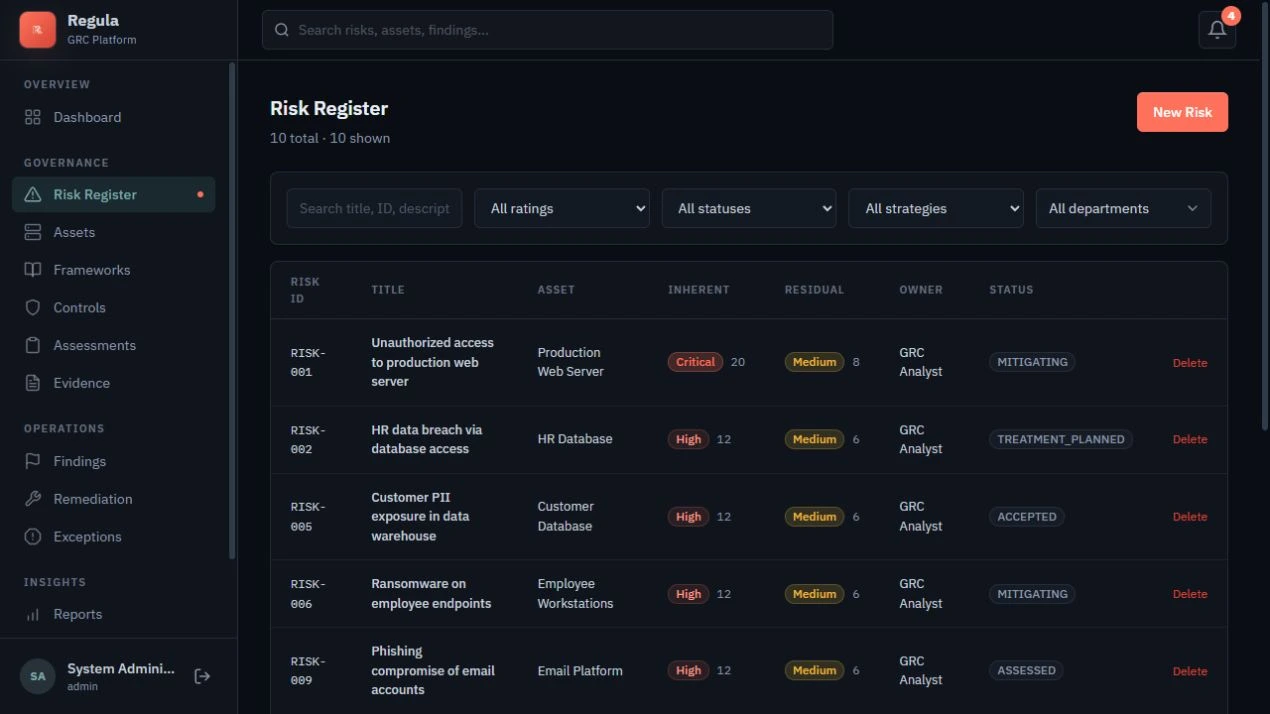
Compare inherent and residual exposure, ownership, treatment, and status.
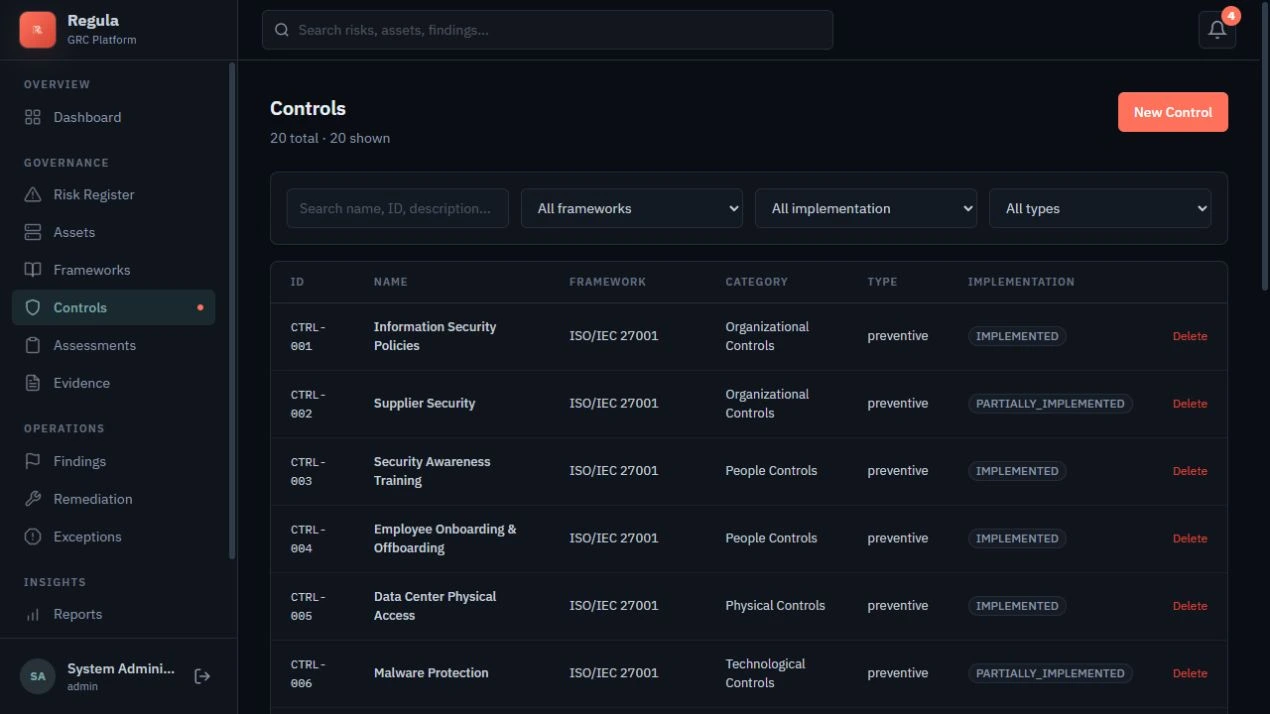
Organize safeguards by framework and review their implementation status.
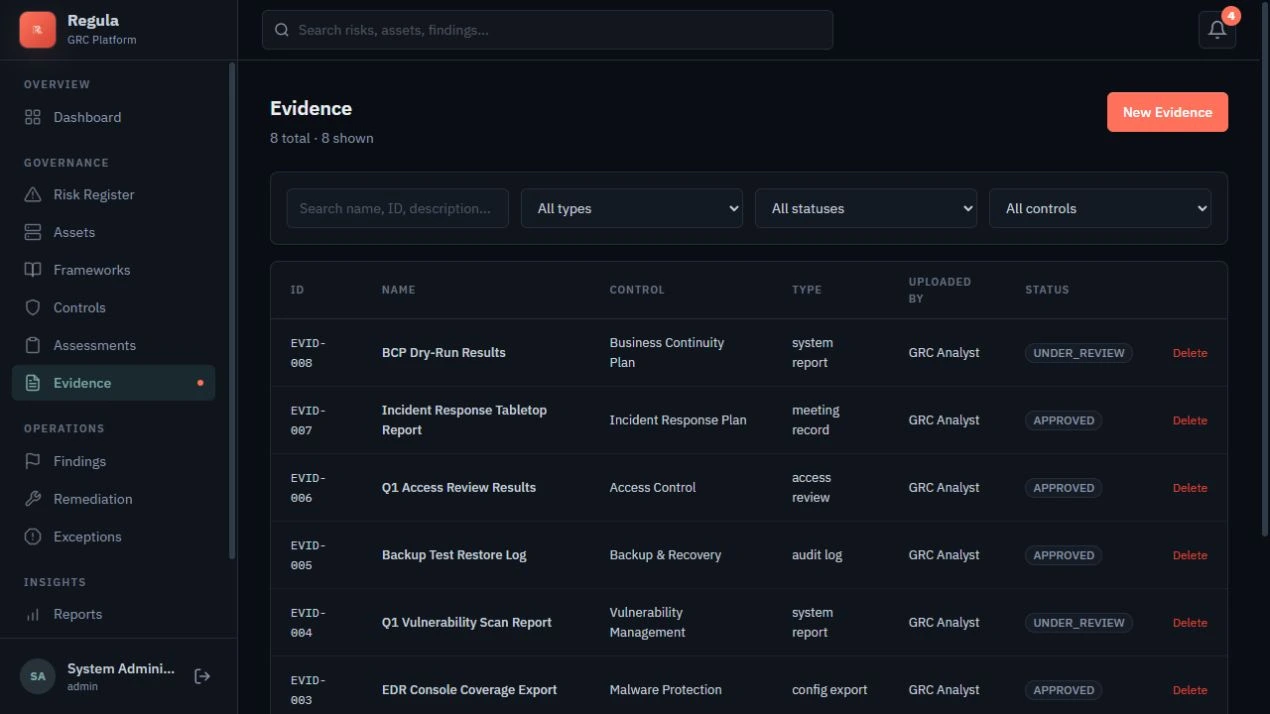
Keep supporting material linked to the control being evaluated.
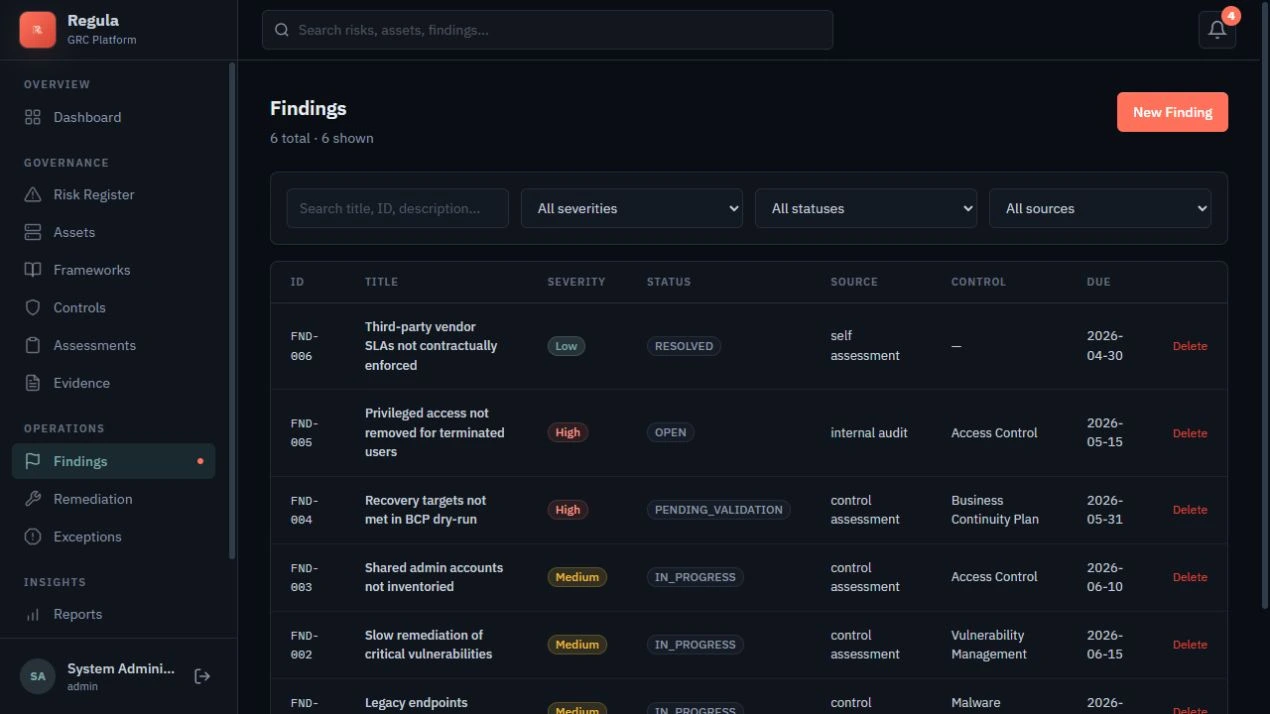
Review identified gaps, associated controls, severity, and due dates.
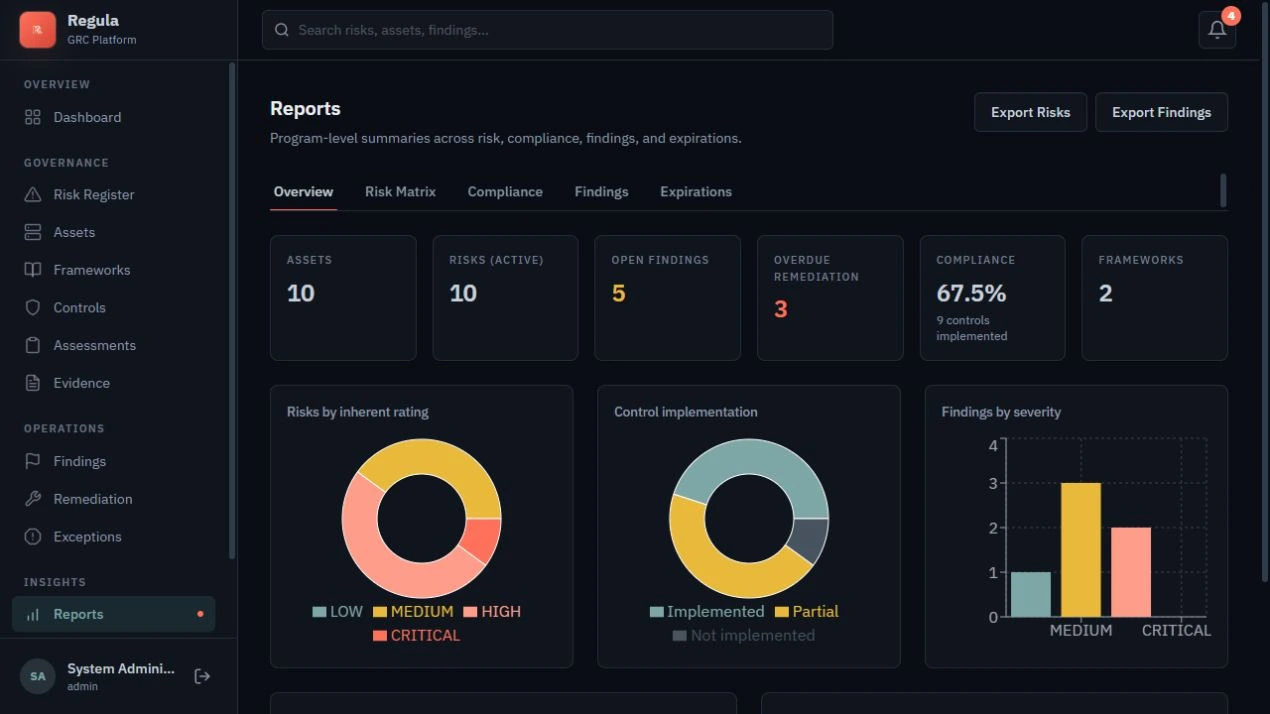
Review risk, control, finding, and expiration summaries with CSV export actions.
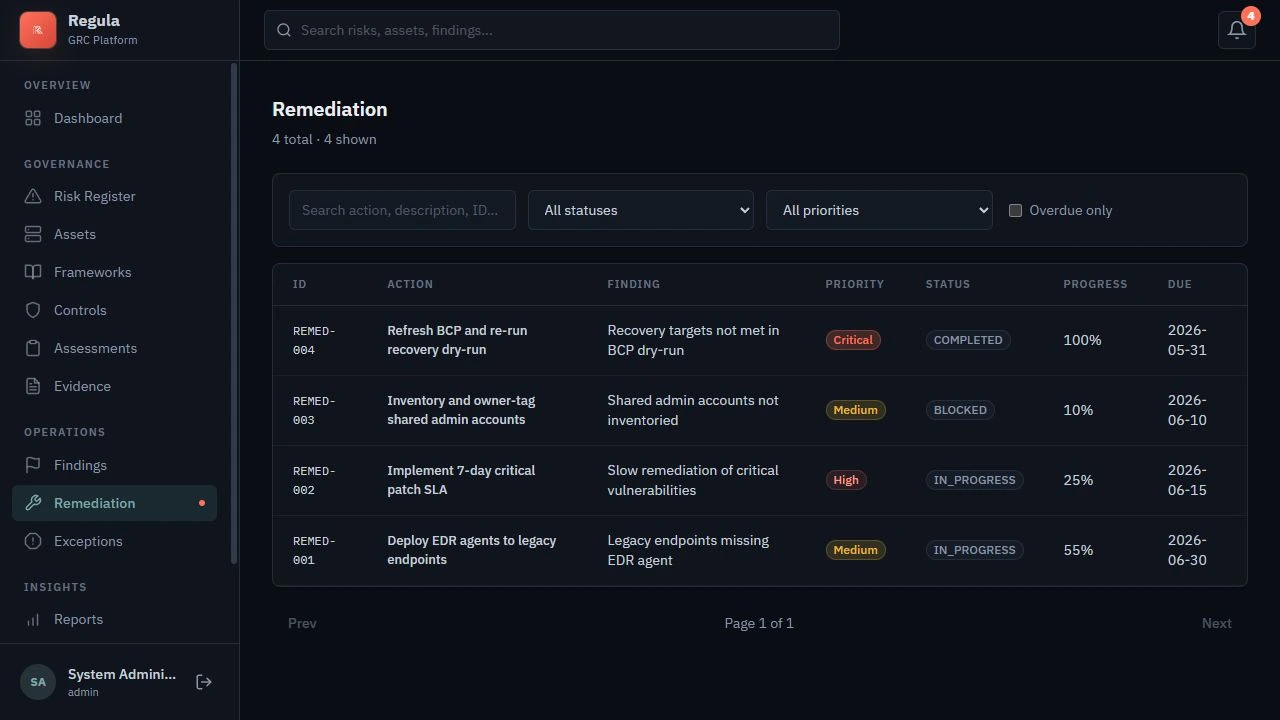
Follow each corrective action from the original finding to its current progress and due date.
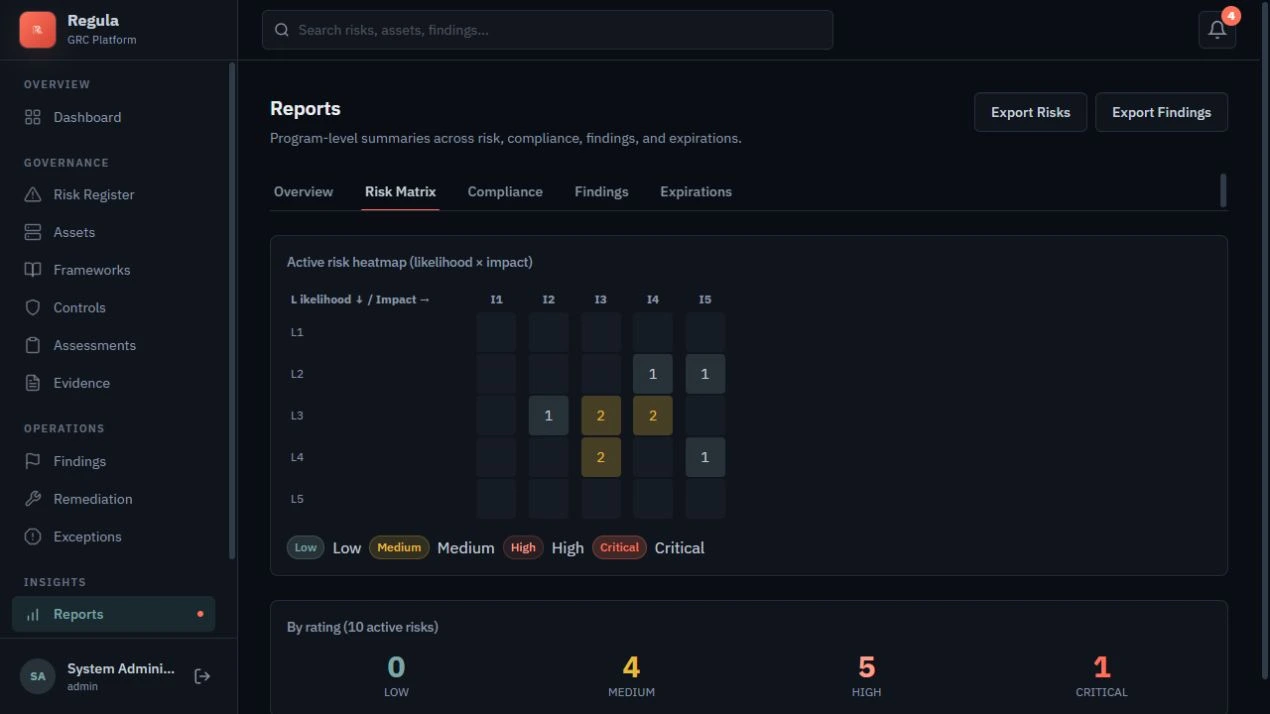
The 5×5 heatmap makes the distribution of active risks visible across likelihood and impact.
React powers the workspace and reporting charts. FastAPI validates requests and enforces permissions, with SQLAlchemy handling persistence. PostgreSQL supports Docker deployment; SQLite is available for local development.
Inherent risk describes exposure before considering controls. Residual risk is scored independently to represent the risk remaining after mitigation. Both use likelihood × impact, with scores from 1 to 25.
The reporting score gives implemented controls full weight and partially implemented controls half weight, then divides by applicable controls. Controls marked not applicable are excluded. The score summarizes implementation progress; it does not certify an organization’s compliance.
Admin, GRC Analyst, Auditor, and Management roles are checked by backend permission dependencies. Interface visibility supports those boundaries; the API enforces them.
Audit logging records important changes. Evidence uploads use generated filenames and validation of file size and type, linking supporting material to the controls being assessed.
Regula is a portfolio and educational application using a simplified risk model and paraphrased framework content. Its value is in making the relationships and workflow understandable.