Why I built it
I wanted to put SOC concepts into practice through a working system. Bakas connects log analysis, detection rules, alert triage, and investigation notes so I can follow an event through to a documented decision.


A portfolio-scale SIEM that turns uploaded security logs into explainable alerts, investigations, and incident reports.
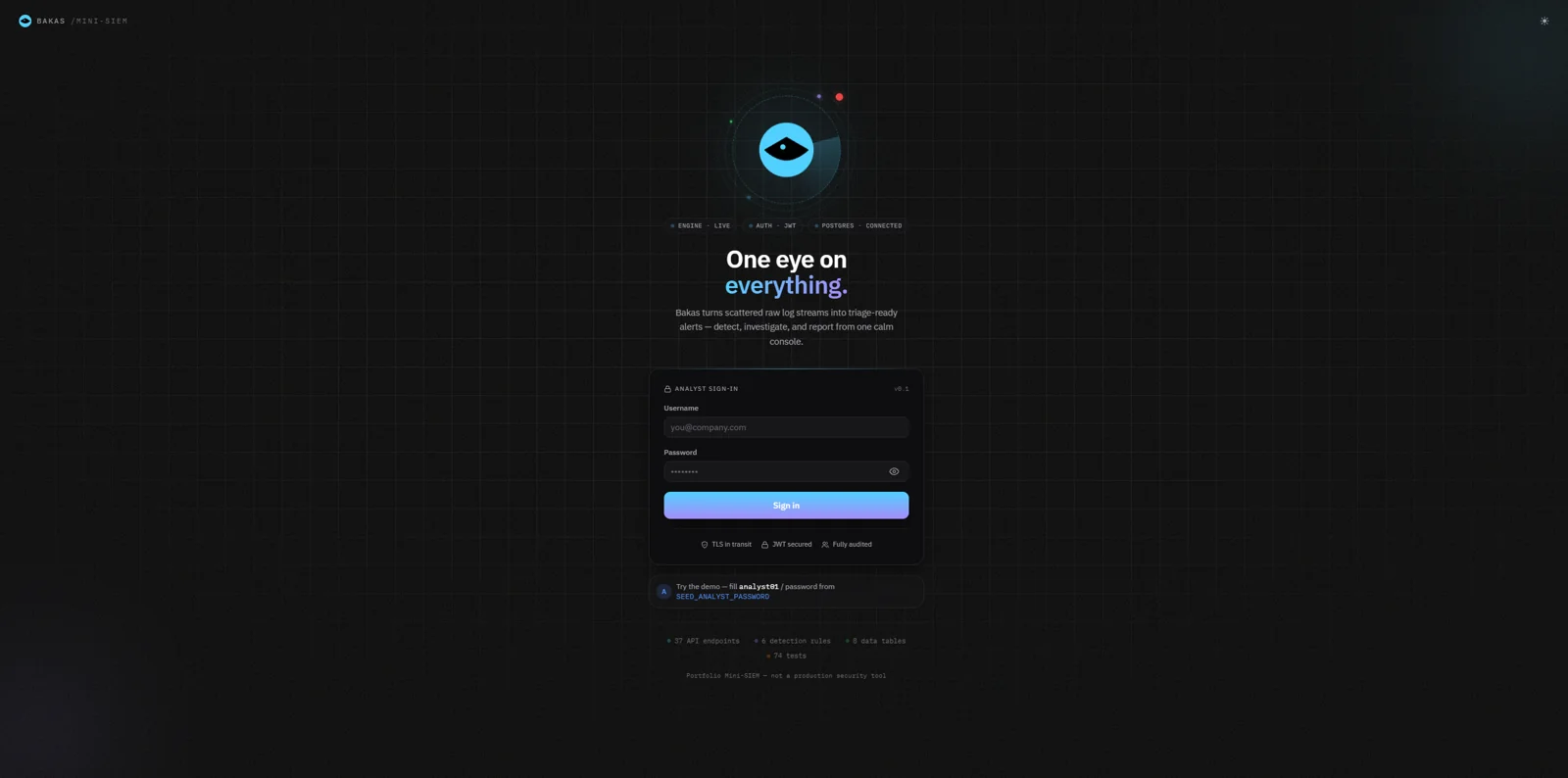
I wanted to put SOC concepts into practice through a working system. Bakas connects log analysis, detection rules, alert triage, and investigation notes so I can follow an event through to a documented decision.
Build a manageable, end-to-end analyst workflow: upload security logs, inspect explainable detections, investigate the evidence, and turn related alerts into an incident report.
CSV, JSON, and JSONL uploads are parsed and normalized into a common event schema. Field aliases handle inconsistent vendor names while the original raw log stays available.
Six configurable rules cover brute force, successful login after brute force, multiple failed logins, new account creation, suspicious PowerShell, and known IOC matches.
Filter and assign alerts, inspect raw and normalized events, reconstruct a timeline, and record a structured analyst assessment.
Link alerts into an incident, merge their evidence chronologically, record a resolution, and export a Markdown report.
Actual captures from the local Bakas application, using fictional sample events. Select an image to view it full size.
The entry point to the analyst workspace.
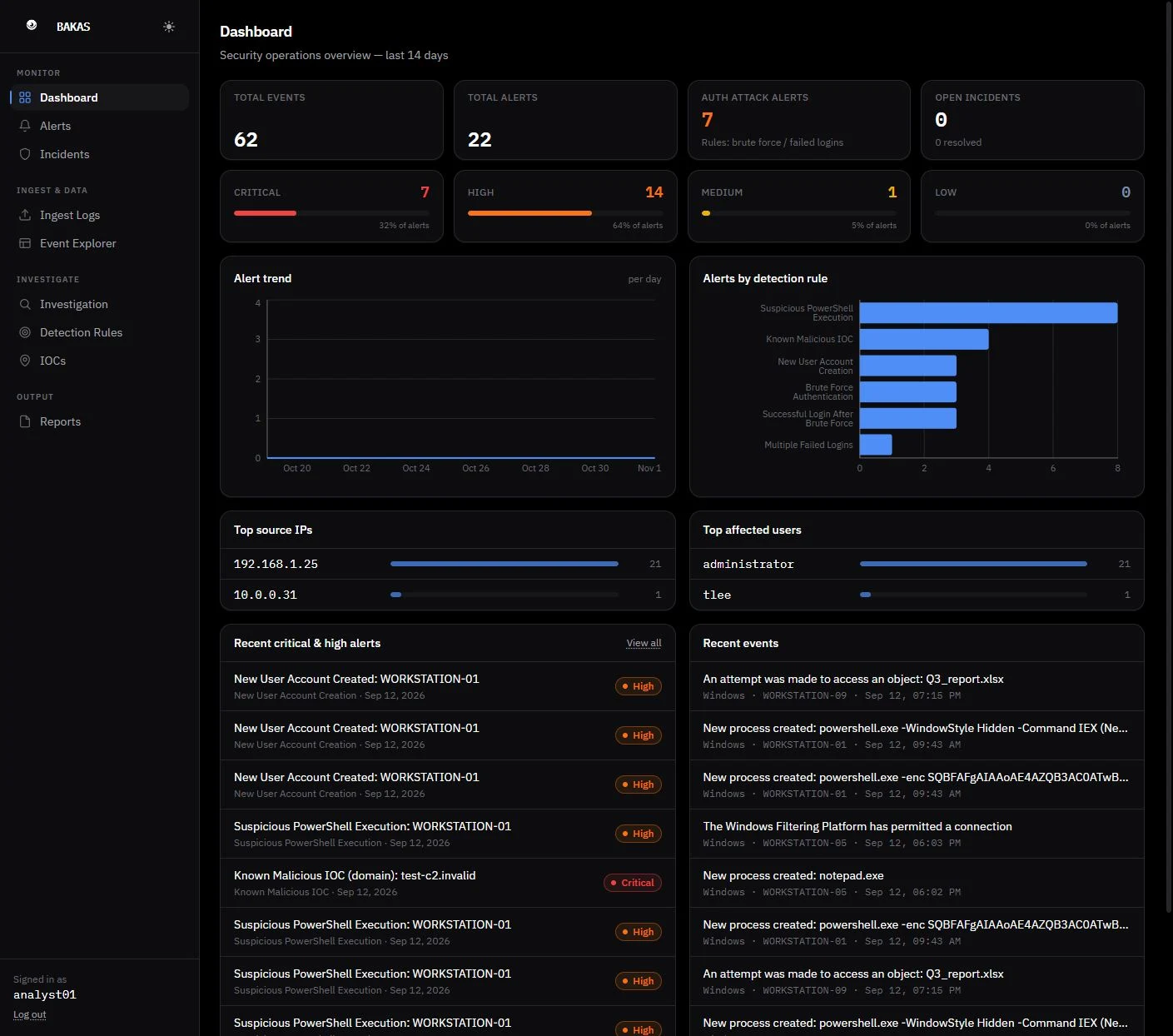
An overview of the current alert workload and recent activity.
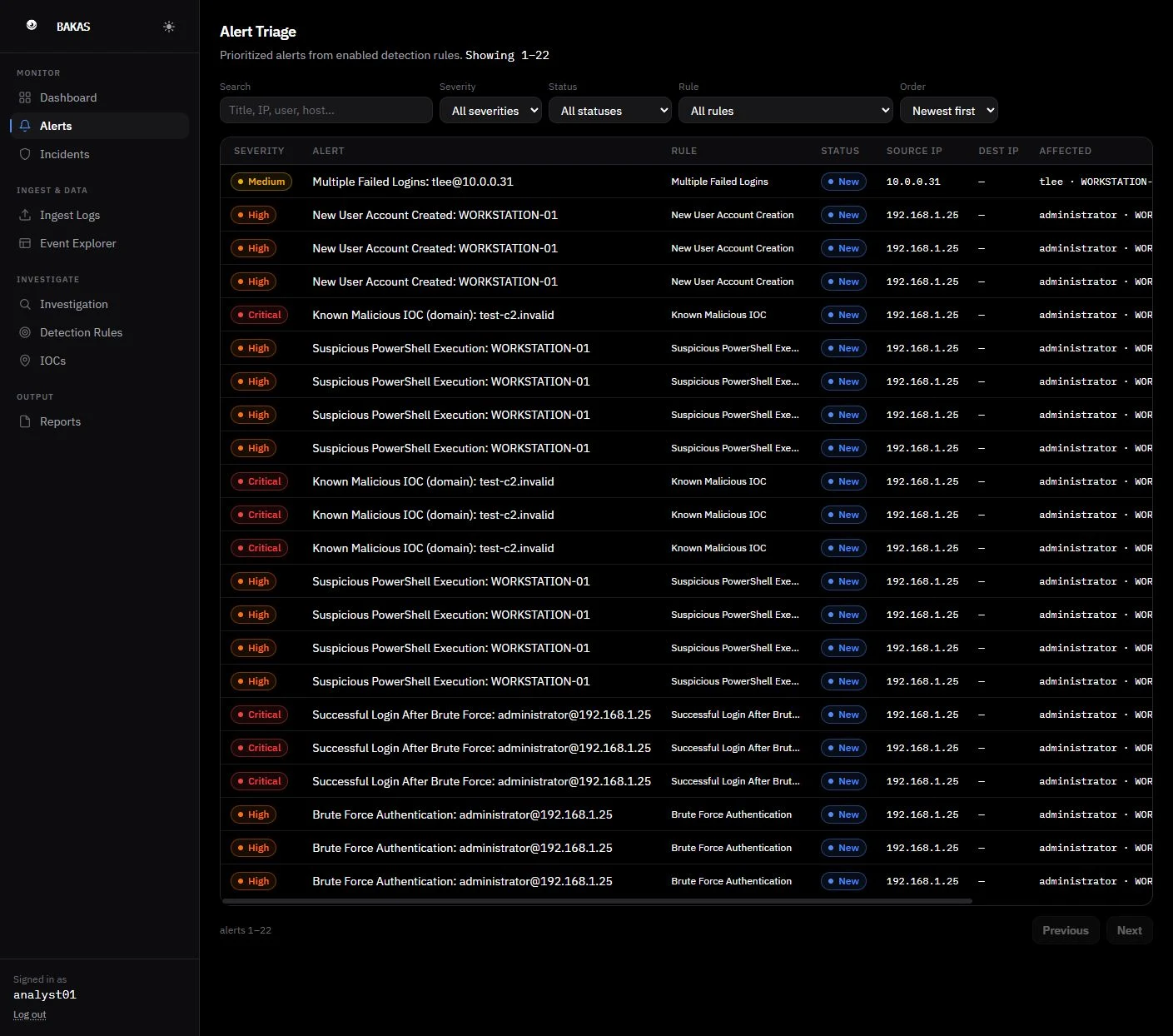
A focused queue for deciding what needs investigation.
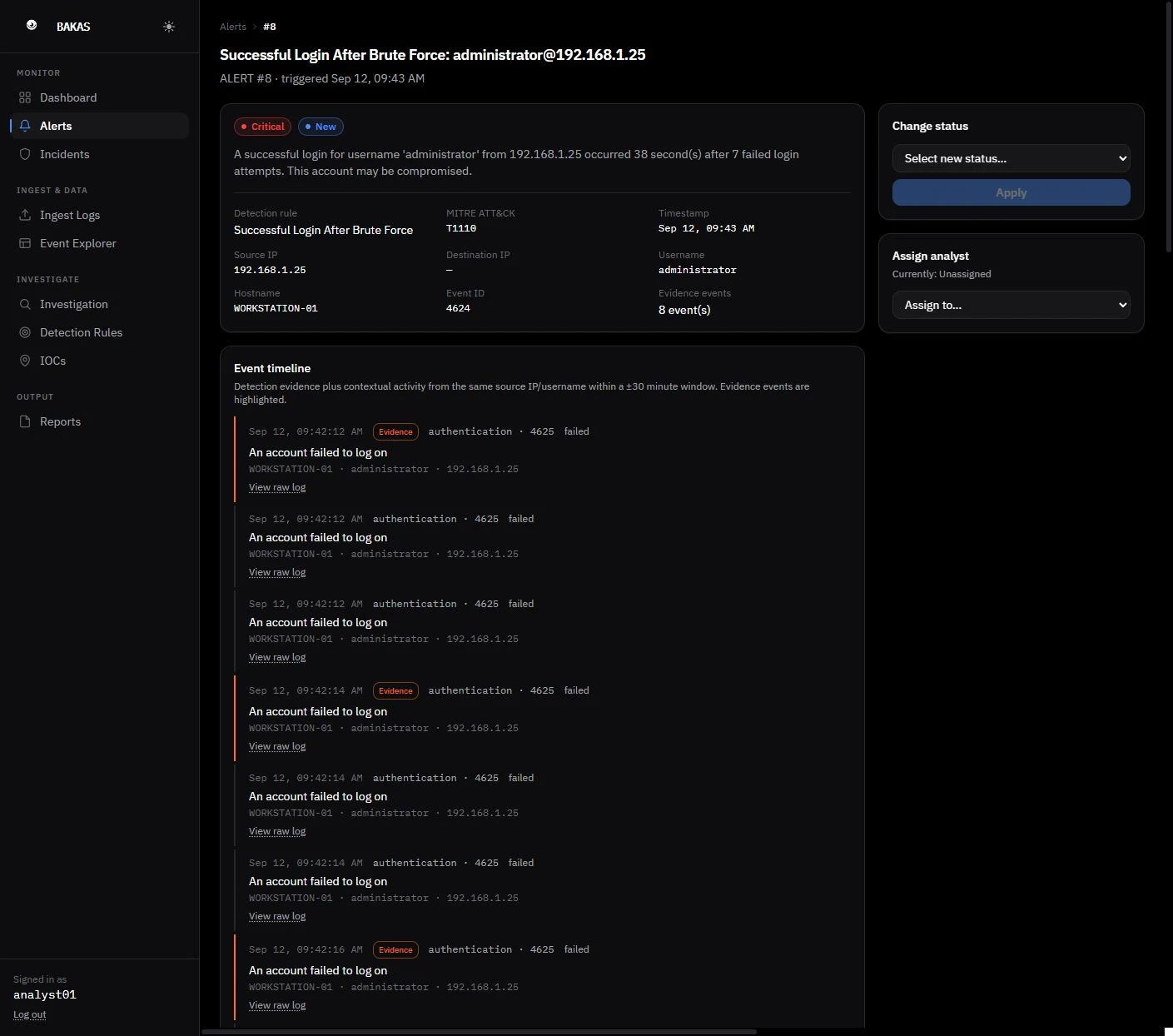
Move from an alert to the events that explain it.
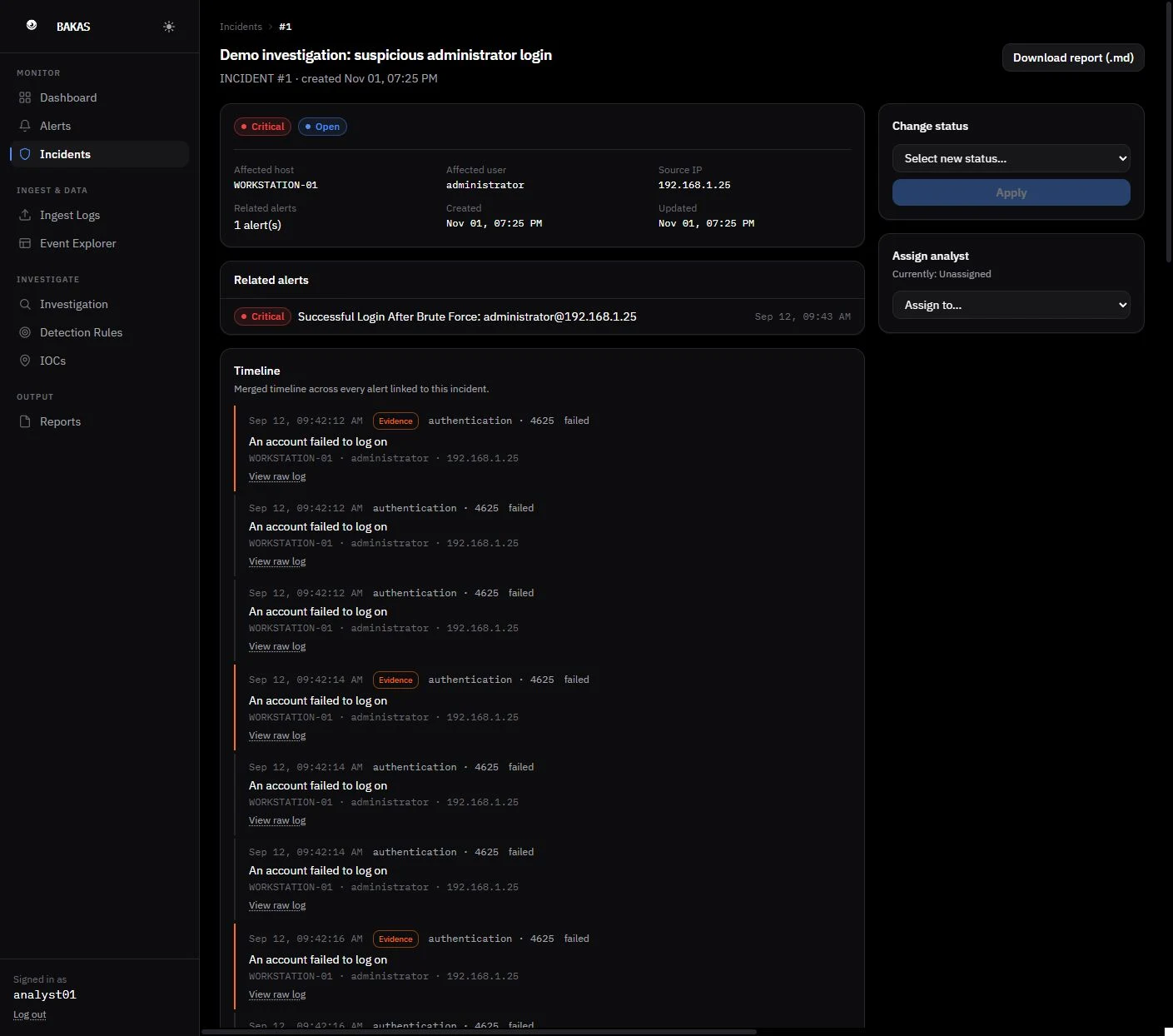
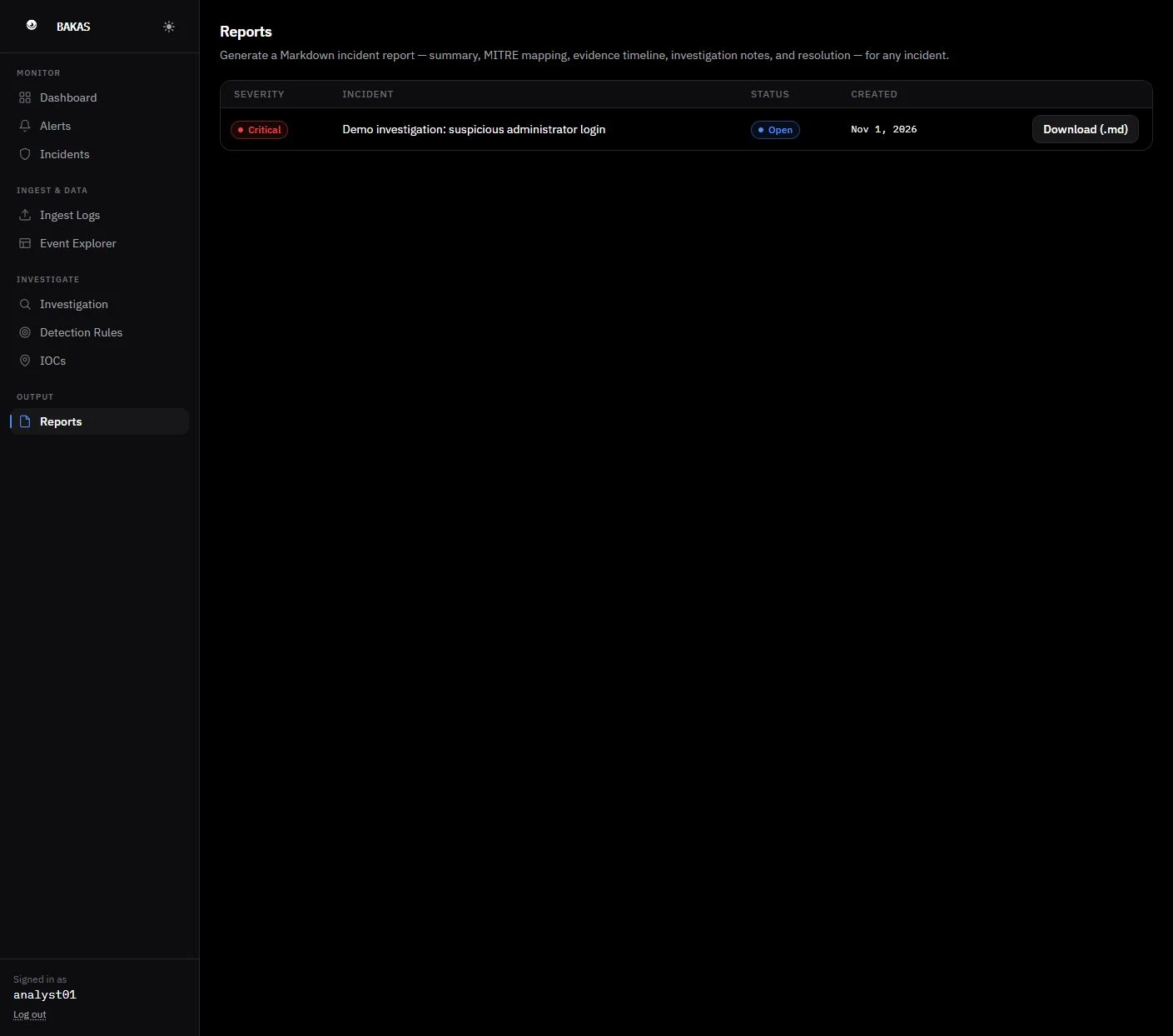
Keep related findings together and prepare a clear hand-off.
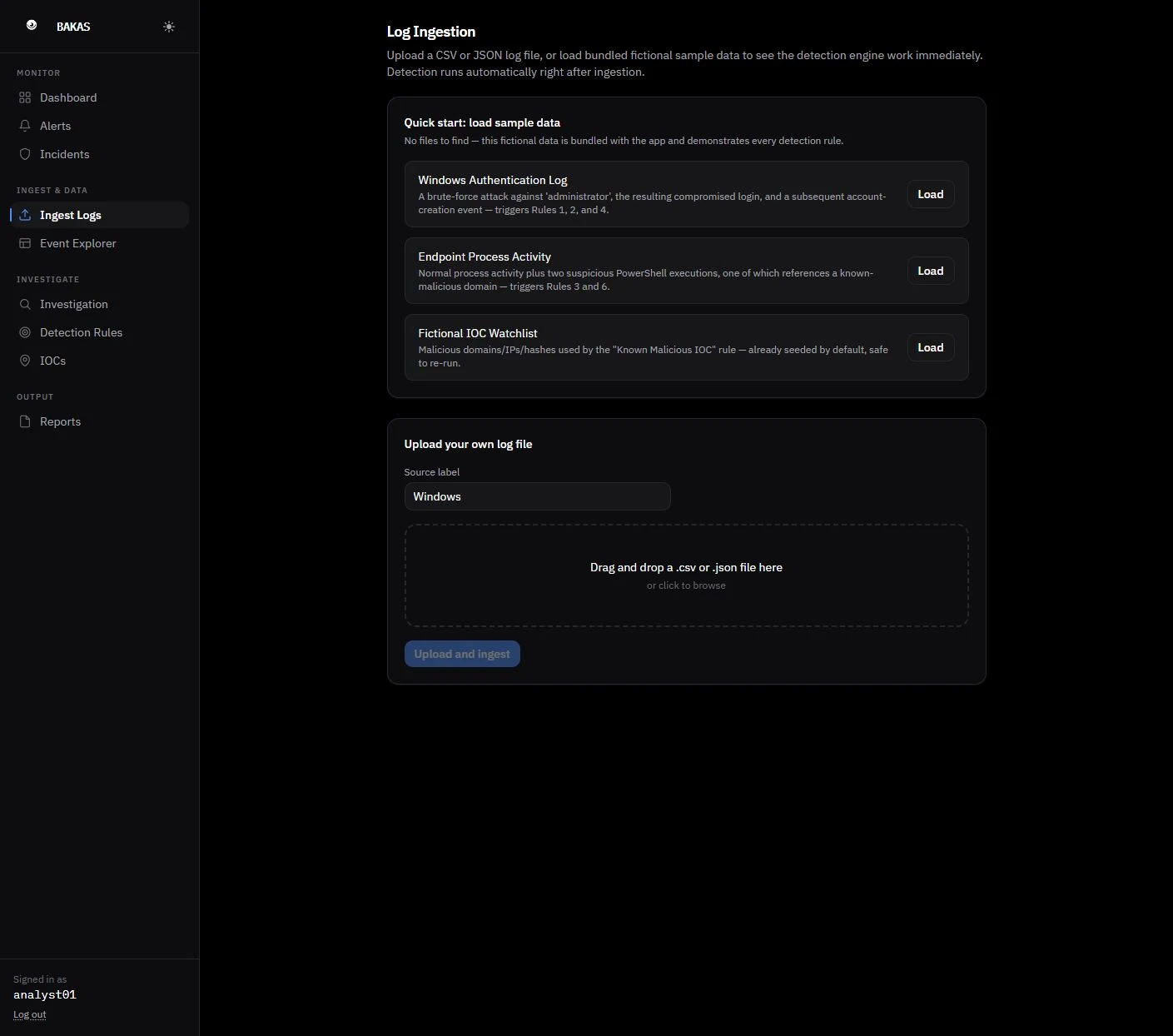
Upload CSV or JSON logs, or load the bundled fictional samples.
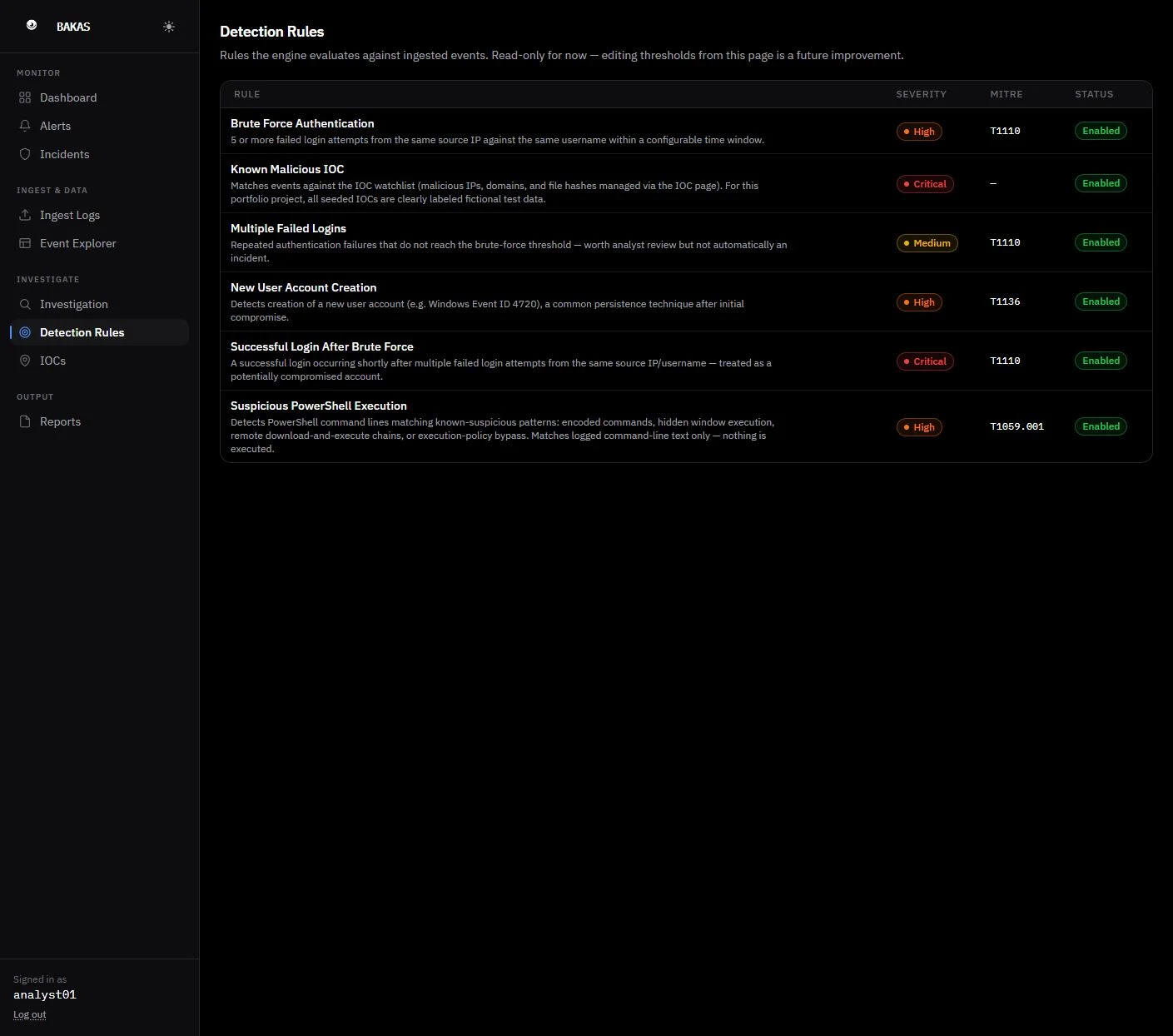
Review enabled detection rules, severity, and MITRE mappings. This screen is read-only.
React and TypeScript power the analyst interface. FastAPI connects file ingestion and rule-based detection to PostgreSQL, while Docker Compose brings the local stack together.
Detection rules operate on plain Python dataclasses. A service bridges database records to the engine, keeping detection logic independently testable.
The detection service skips alerts with the same rule and evidence event set. Re-running detection after another upload avoids identical findings in the queue.
Technique-based rules use T1110, T1059.001, or T1136 where applicable. Generic IOC matches intentionally have no MITRE technique mapping.
Recharts supports dashboard visualizations; React Router handles navigation. Authentication uses JWT and bcrypt. Docker Compose runs PostgreSQL, FastAPI, and an nginx-served frontend.
This example follows the bundled fictional Windows authentication scenario documented in the project.
Authentication events produce a high-severity brute-force alert and a critical successful-login-after-brute-force alert.
Assign the critical alert, inspect the failed-login sequence and subsequent success, and complete the analyst assessment.
Promote the alert to an incident and link related alerts. The timeline combines evidence into a deduplicated chronological account.
Record the resolution and export a Markdown report with related alerts, MITRE techniques, evidence, notes, and recommended response.
Bakas prioritizes an understandable investigation workflow over enterprise-scale infrastructure. Logs are uploaded as files, detection re-scans stored events, and authenticated users share a single analyst role.
The repository includes unit tests for parsing, normalization, detection rules, alert and incident business logic, and report formatting. API routes, database-dependent services, and the frontend rely on manual scenarios.